The Impact Multiplier: How to Turn One Human Story into Months of Content
We’ve all been there: the endless, exhausting cycle of constant content creation. You finish one newsletter or annual report, and immediately, the clock resets. But what if you could break that cycle? It’s a strategy I’ve used frequently as “a trust marketer.”
Getting a client or community member to share their story is 80% of the work. Once you have that person in the room and they trust you, it’s time to stop treating storytelling like a one-off task. Instead, you need to turn that single "Impact Interview" into a multi-month content machine.
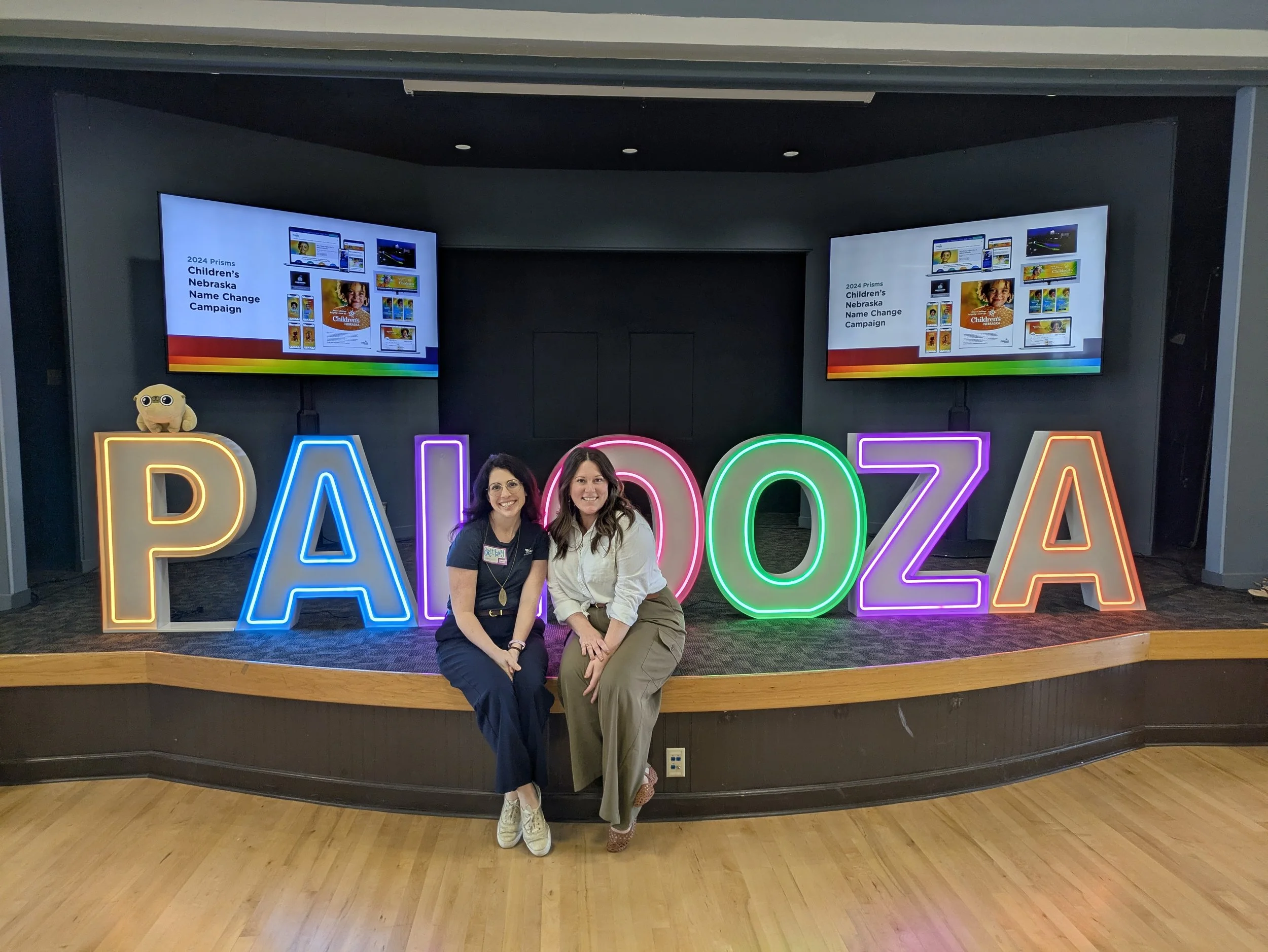
This is a picture of my friend Rebecca McNeese (my go-to photographer) and me at Purpose Palooza, where I just recently presented this idea.
1. The Two-Interview Strategy: Trust First, Emotion Second
Don't jump straight into a high-stakes video shoot. If people feel like you’re in a hurry or it’s the first time they’ve met you, they won't open up. Try a two-interview approach instead:
Interview 1 (The Foundation): Start with an audio recorder (like the free Google Recorder app) just to have an open-ended, casual conversation. Ask easy questions to build trust ("Tell me about yourself") and move into context-gathering. Use this transcript to write your core long-form story.
Interview 2 (The Camera): Once the written story is vetted and approved, bring in the videographer. Because the subject already knows and trusts you, you can easily drill down into the emotional hooks ("How did that feel?"). This saves post-production editing time because you already know exactly where the best sound bites are.
2. Protect the Story (Get Vetting and Approvals)
Before you publish a single word, ensure you have buy-in from every stakeholder. Send the long-form draft to your Executive Director, any partner organizations mentioned, and — most importantly — the interview subject. Make sure they are entirely comfortable with how their story and photos are being handled.
Pro tip on photos: Always take pictures on your phone during the interview, even if you don't think you'll use them. When you’re creatively drained weeks later, looking at those authentic photos will reinspire your writing. Plus, you can use the good ones to share the story on social media.
Your story should focus on transformation for the biggest impact. Establish your character, give him a challenge, and then let the change occur. More on that from my 2025 Purpose Palooza roundtable.
3. Build the "Endless" Workflow Doc
Once the core long-form story is finalized and approved, the hard work is done. Open up a Google Doc — set it to Pageless View so you aren't restricted by page breaks — and paste the long-form story at the very top. Even better, set up a Content Command Center with AI.
Right below it, draw a horizontal line and use that single story to map out 3 to 4 months of content all at once while it's fresh in your head:
Social Media Snippets: Pull out 6 to 10 separate posts. Drop a quote in one, describe the physical scene in another, bring in a data point to back up the story in a third, or highlight a partner organization. Spaced out over a couple of months, these will all feel like fresh content to an audience that doesn't click "read more" every time. Pro tip: Value authenticity over being polished. Remember, data is emotionally boring, so don’t let it be your primary story.
Single-Subject Email Appeals: Write a direct fundraising or volunteer email. Grab a raw quote from the transcript that describes how the client felt, and use that as your email subject line. Use an interview photo as the hero image, paste a few compelling paragraphs, and drive them to a website landing page with a clear call to action.
Newsletter & Annual Report Snippets: Write a brief 2-sentence teaser for your next monthly newsletter. Then, write the short quote testimonial for your annual report. Doing this now means you won't be panicking when January rolls around.
The Media Pitch: Tie a fresh report or local trend to this specific human story. Pitch it to local journalists and offer to connect them directly with the person you interviewed.
Videos & Photos: Because the second interview included the camera, your team should be able to use real photos and short snippets of video to promote the story. Don’t rely heavily on stock photos.
Storytelling isn't just about grabbing a quote for a single social post. Treat your impact stories like a long-term resource. Frame the invitation to your clients as another meaningful way to give back—just like donating or volunteering—so your organization can secure the funding to help more people just like them. Capture it right, protect their trust, and let that one human story sustain your marketing pipeline for months.
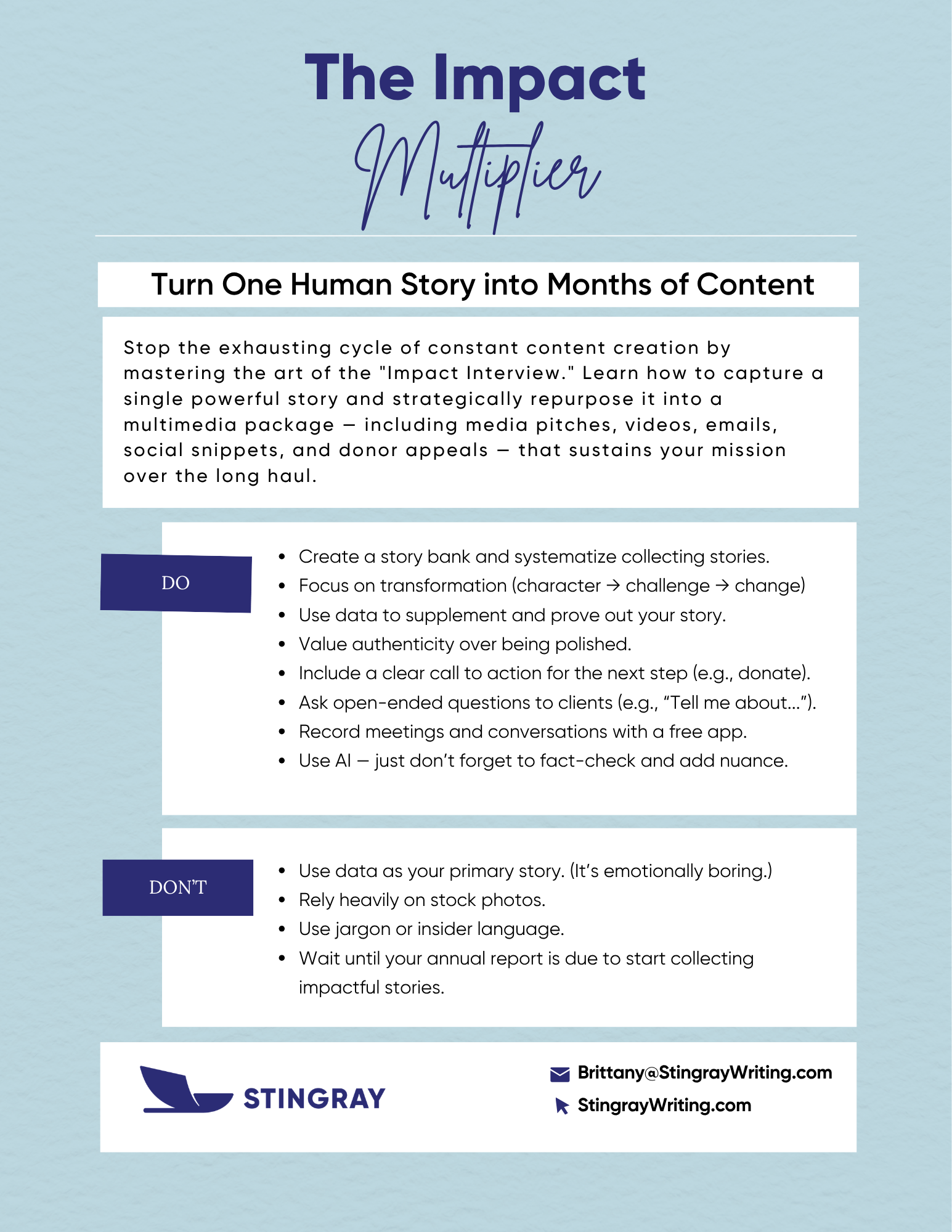
My Free Impact Storytelling Template
As promised during my round tables, here is a Google Doc template you can use as a springboard for your own impact storytelling. The uses for this template are endless. You can add more social posts, a video script, interview questions, copy for direct mail campaigns, etc., and it’s all saved in one doc you can refer back to over and over.
Want help with your impact storytelling? Let’s talk.